Raising fat palmipeds: tradition, passion and expertise
The farming of fat palmipeds is a true passion and a tradition transmitted from generation to generation. Farmers are the keepers of ancestral knowledge and they perform their jobs with pride and passion.
Foie gras is used in haute cuisine and can't be produced using intensive methods. Most farms are still artisanal and family-run.
 The tradition of foie gras markets continues to our day in the producing regions. They start in mid-November around St. Martin's Day.
In 2013, there were about 3000 farms specialising in the production of foie gras for major brands and about a 1000 farms selling directly to the public.
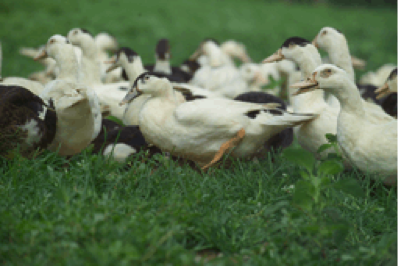
The Mulard duck is the species most often used (90% of national production), far ahead of the Barbary duck and the grey Landes goose.
The major steps of ducks and goose raising
Two key steps
There are two major steps in the foie gras production cycle for ducks and geese :
- Breeding, the longest part of the life of the duck or goose
- Fattening, which is quite short
These two successive steps are required for the development of a fat duck or goose. The breeding period accounts for about 90% of the animal's life span whereas the fattening phase is about 10 to 14 days for ducks.

Foie gras is the end product of these two steps.
Stockbreeding phase
The stockbreeding phase is decisive in preparing a successful fattening phase.
It consists of several steps :
- Start-up;
- Growth ;
- Preparation for fattening.
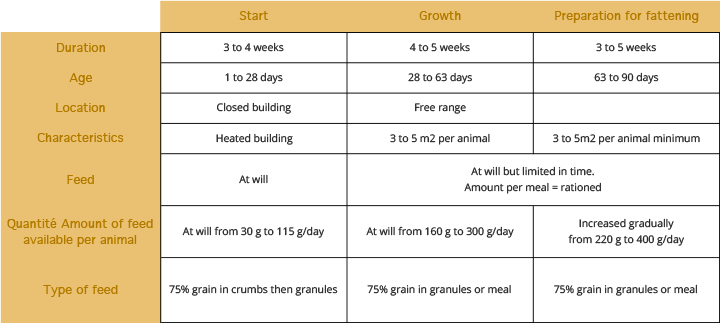
Special care must be taken during the preparation stage to ensure that the palmipeds naturally develop the physiological attributes needed for fattening.
The animals are only fed once a day during the preparation stage. Their feeding instinct leads them to spontaneously ingest large quantities of maize.
This is natural behaviour which can be seen from the earliest age. It encourages three phenomena required for the production of quality foie gras:
- An increase in crop size
- Stimulation of the digestive function required during fattening
- The start of the foie gras production process with a natural increase in liver size
A pre-fattened liver doesn't have the right characteristics yet. It will only acquire the expected taste during the fattening phase.
This type of feeding programme in preparation of fattening (or "jabotage") creates the conditions needed for fattening and reduces its duration.
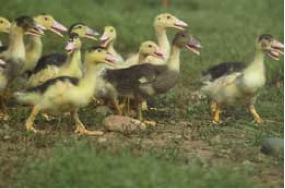
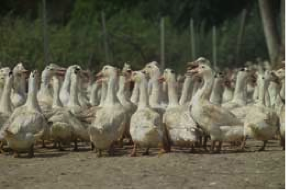
Ducklings at 4 weeks / Ducks at 12 weeks